Stop losing royalties to bad metadata.
Inaccurate credits are the #1 reason for delayed payments. Use this checklist to ensure every stream counts and every contributor is credited correctly.
Generate your metadata sheet
Fill in the fields for an instant metadata sheet. Sign in for AI-optimised tags.
## Release metadata

| Field | Value |
|---|---|
| Track title | Neon Fields |
| Primary artist | Aurora Lane |
| Featured | [Featured artist(s)] |
| Display title | Neon Fields |
| Genre | Electronic |
| Subgenre / mood | Indie electronic, chill |
| BPM | 104 |
| Key | A minor |
| ISRC | [ISRC (optional)] |
| Songwriter(s) | Anna Lane |

**Search tags:** Electronic, Indie electronic, chill, Aurora Lane, new music
Why it matters
Royalty Accuracy
Correct songwriter and publisher tagging ensures PROs like ASCAP, BMI, and PRS can track your earnings.
Searchability
Rich metadata (genre, mood, BPM) helps AI-driven discovery tools find your music.
Legal Protection
Documented credits serve as a record of ownership and contribution for all collaborators.
Why Metadata Matters More Than the Mix
Metadata is the digital DNA of your track. Without accurate ISRC codes, songwriter splits, and publisher information, streaming platforms cannot attribute revenue to you. This checklist ensures your release is technically perfect for DSPs and sync licensing opportunities.
Prevents 'Unknown Artist' errors on streaming platforms.
Ensures mechanical and performance royalties reach the right bank accounts.
Makes your music searchable for music supervisors and sync agents.
Maintains professional standards for label submissions.
## Advanced Metadata for Global Promotion and AI Discovery
Beyond basic distribution, metadata now dictates how AI-driven discovery engines and professional curators categorize your music. When you upload a release to The Musical Road, your metadata fuels the AI Campaign Generator, which parses your genre, mood, and technical data to match your music with the most relevant DJs and press outlets in our Global Music Network.
Optimization Tactics for Modern Metadata
To maximize your reach, treat your metadata as search-optimized data points rather than just administrative requirements:
- The 'Mood' Anchor: Don't just list a genre. Use descriptive mood tags (e.g., 'Aggressive,' 'Dreamy,' 'Nostalgic'). These tags allow our AI to draft more compelling promo emails that resonate with the specific aesthetic of a curator's playlist.
- Technical Data for DJs: Always include BPM and Key. For electronic music and radio, this is non-negotiable. DJs using our platform filter by these attributes to ensure your track fits the energy and harmonic flow of their next set.
- Geographic Tagging: If your track has a specific regional influence or language, include it. This helps our Audience Insights tool correlate where your listens are coming from with the metadata you provided, allowing you to target future campaigns by specific geography or device.
- Contributor Transparency: Include every contributor's role—from the mastering engineer to the cover artist. In a 'credit-first' industry, this builds professional rapport and ensures that when you export your Campaign Analytics PDF, your partners see their contributions documented.
By centralizing this data in our Release Management hub, you ensure that every smart link, promo email, and sync pitch is backed by a single, verified source of truth.
Key features
ISRC Validator
Verify your codes before they go live to avoid distribution rejections.
Contributor Roles
Differentiate between Primary Artist, Featured Artist, Remixer, and Producer.
The Professional Music Metadata Checklist
Use this structure to organize your data before uploading to your distributor or The Musical Road.
1. Basic Release Information
- Release Title: Exactly as it appears on the artwork.
- Version Info: (e.g., Radio Edit, Remix, Acoustic). Leave blank for standard versions.
- Primary Artist: The main artist(s) credited.
- Featuring Artists: Artists appearing on the track but not owners of the project.
- Genre & Sub-genre: Be specific (e.g., 'Melodic Techno' rather than just 'Electronic').
- Release Date: Ensure this aligns with your Music Release Strategy Plan.
2. Technical Identifiers
- ISRC: (International Standard Recording Code) for each track. Use our ISRC Validator if unsure.
- UPC/EAN: (Universal Product Code) for the entire album or single.
- BPM: Essential for DJ-focused promotion.
- Key: (e.g., C Minor) helps curators mix your track into playlists.
3. Rights & Credits (The 'Money' Data)
- Songwriters: Legal names only (no stage names).
- Publishers: The entity that owns the composition rights. If self-published, list your own publishing entity.
- Split Percentages: Must total 100% for both lyrics and music.
- PRO Information: Mention if you are with ASCAP, BMI, SESAC, or PRS.
4. Creative Metadata
- Lyrics: Clean text without time stamps (unless requested for synced lyrics).
- Explicit Content Tag: Yes/No. Be honest to avoid takedowns.
- Language: The primary language of the vocals.
Pro Tip: The 'Sync-Ready' Standard
If you want your music featured in film or TV, music supervisors require 'Description Metadata'.
- Moods: (e.g., Uplifting, Dark, Cinematic)
- Instruments: (e.g., Analog Synth, Acoustic Guitar)
- Vocal Gender: (e.g., Female Vocals, Instrumental)
Need help organizing your next campaign? Use our AI Music Promotion Campaign Generator to turn this metadata into a high-converting press blast.
Use cases
Independent Artists
Self-distributing via platforms like DistroKid or TuneCore and needing a final pre-flight check.
Boutique Labels
Managing multiple artists and ensuring consistent data entry across a catalog.
See it in action

The Musical Road's release manager streamlines metadata entry with built-in validation.
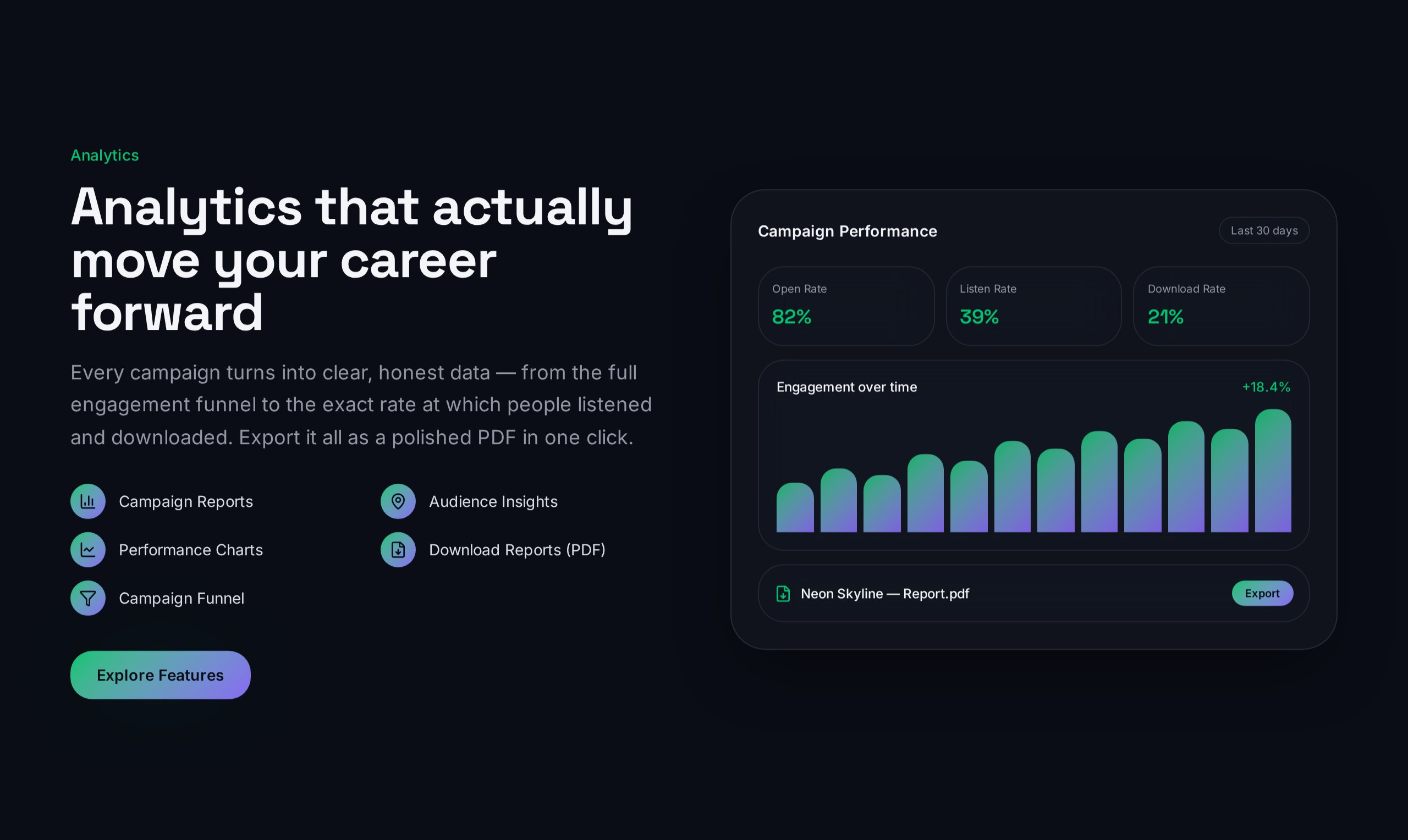
Campaign analytics
Every campaign becomes honest data — open, listen and download rates, engagement over time, and a one-click PDF report.
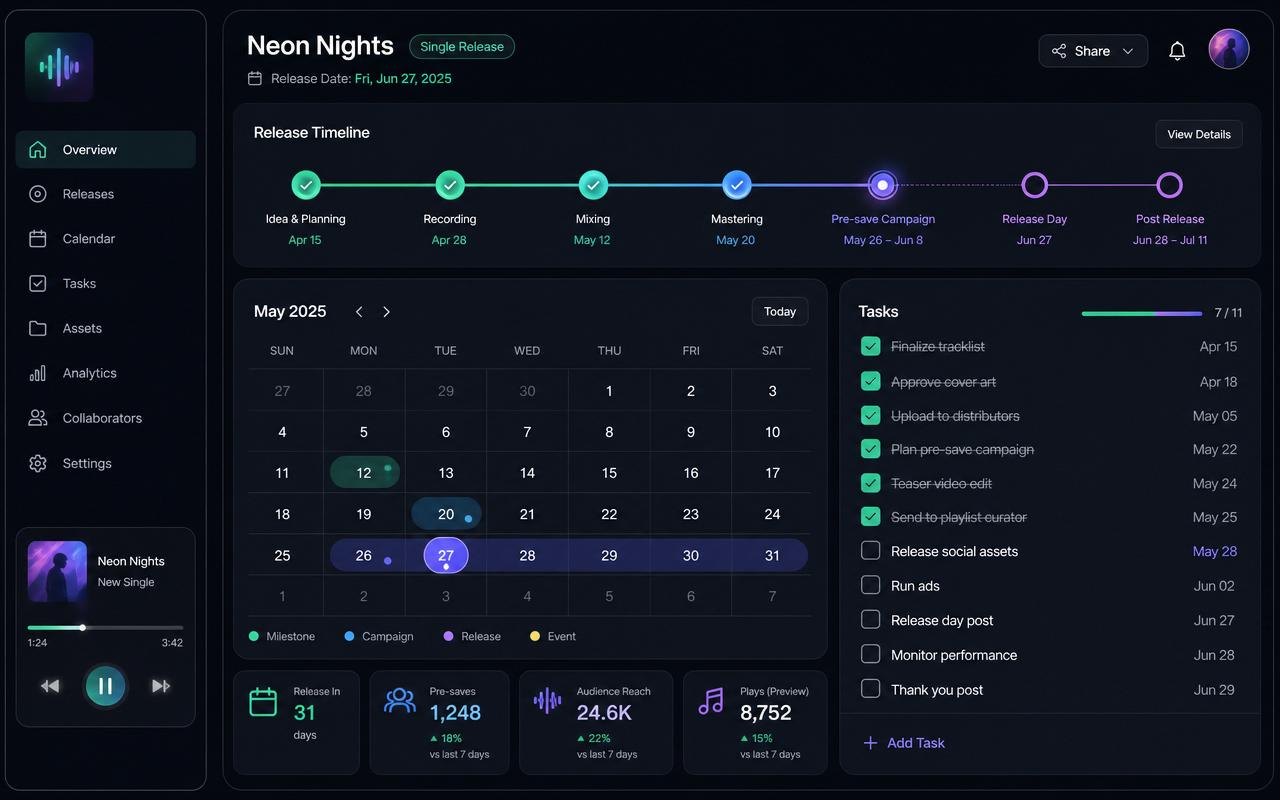
Release planner
Plan every release on a timeline and calendar, with a task checklist that keeps your rollout on schedule.
Frequently asked questions
- What is an ISRC code?
An International Standard Recording Code is a unique 12-character identifier for a specific sound recording. Every remix or edit needs its own ISRC.
- Can I change metadata after a song is released?
It is difficult. While some DSPs allow updates, it often causes data fragmentation. It is best to get it right the first time using a checklist.
- What are 'Splits'?
Splits refer to the percentage of ownership each songwriter and publisher has in the composition (the lyrics and melody).
Explore more
Related articles
Related templates
Ready to release your next hit?
Upload your tracks and let our AI handle the promotion and SEO optimization.
Start free