Keep Your Royalties or Keep Your Cash?
Navigating the financial landscape of music distribution requires more than just picking a name. It requires a strategy that protects your long-term revenue.
Why it matters
Predictable Overhead
Flat-fee models allow you to budget your year without worrying about how much of your streaming check will be deducted.
Maximum Scalability
If a track goes viral, a flat-fee distributor doesn't take a larger cut. You keep 100% of the upside.
The Real Cost of Distribution
For independent artists, the choice between paying an upfront annual fee or giving away a percentage of royalties is one of the most significant financial decisions you'll make. A commission model might feel 'free' at the start, but as your streams grow, that 15% cut can quickly exceed the cost of a premium flat-fee subscription.
Flat-fee models offer predictable yearly costs.
Commission models lower the barrier to entry for new artists.
Hybrid models often charge for specific add-ons or 'pro' features.
Key features
Release Management
Organize your artwork, audio, and metadata in one central command center before you push to stores.
Audience Insights
Track exactly where your royalties are coming from with geographic and device-level data.
Understanding the Two Main Pricing Models
Your Music Release Strategy depends on how you fund your presence on Spotify, Apple Music, and Tidal. The industry generally splits into two categories: Flat-Fee (Subscription) and Commission-Based models.
1. The Flat-Fee Model (Subscription)
Distributors like DistroKid, Ditto Music, or integrated platforms like The Musical Road charge an annual fee. In exchange, you retain 100% of your royalties.
Pros:
- Unlimited Uploads: Release as much music as you want for a fixed price.
- Keep Your Upside: If a track goes viral, the distributor takes no extra revenue.
- Professional Tools: Subscriptions often include advanced Release Management features.
Cons:
- Recurring Cost: Stopping your subscription may result in music being removed from stores.
- Upfront Risk: You pay the fee before earning any streaming revenue.
2. The Commission-Based Model
Companies like CD Baby or Symphonic may charge a per-release fee or offer 'free' distribution while retaining 15% to 30% of your earnings.
Pros:
- Low Entry Barrier: Ideal for hobbyists testing the market without upfront capital.
- Longevity: Releases typically stay in stores indefinitely without recurring fees.
Cons:
- Cost of Success: A 15% commission on $10,000 in royalties costs you $1,500—significantly more than a flat annual fee.
- Hidden Fees: Some 'free' tiers charge extra for ISRC codes or YouTube Content ID.
Which One Should You Choose?
Review your Campaign Analytics to determine the best path. If your data shows consistent growth, a flat-fee model is usually the more profitable choice.
For example, if a flat-fee service costs $20/year and a commission service takes 15%, the break-even point is $133 in annual royalties. If you earn more than that, the flat fee saves you money.
Beyond Distribution: The Value of Integrated Tools
Distribution is now a commodity; the real value lies in post-release growth. At The Musical Road, we integrate distribution with promotion. Our AI Campaign Generator helps you reach verified DJs and curators immediately after going live.
Focus on systems that help you scale. This includes using Audience Insights to locate fans and AI SEO for Musicians to improve your search rankings.
Final Verdict
- Choose Flat-Fee if: You are a career artist, release multiple singles annually, or earn over $150 in yearly royalties.
- Choose Commission if: You are releasing a one-off project or have no budget for upfront costs.
Prepare for your next rollout by using our Music Metadata & Credits Checklist to ensure your files are store-ready.
Use cases
High-Volume Producers
Producers releasing monthly tracks benefit most from flat-fee models to avoid stacking commission costs across a large catalog.
Emerging Artists
Artists with low initial stream counts may prefer commission models to keep upfront costs at zero while they build an audience.
See it in action
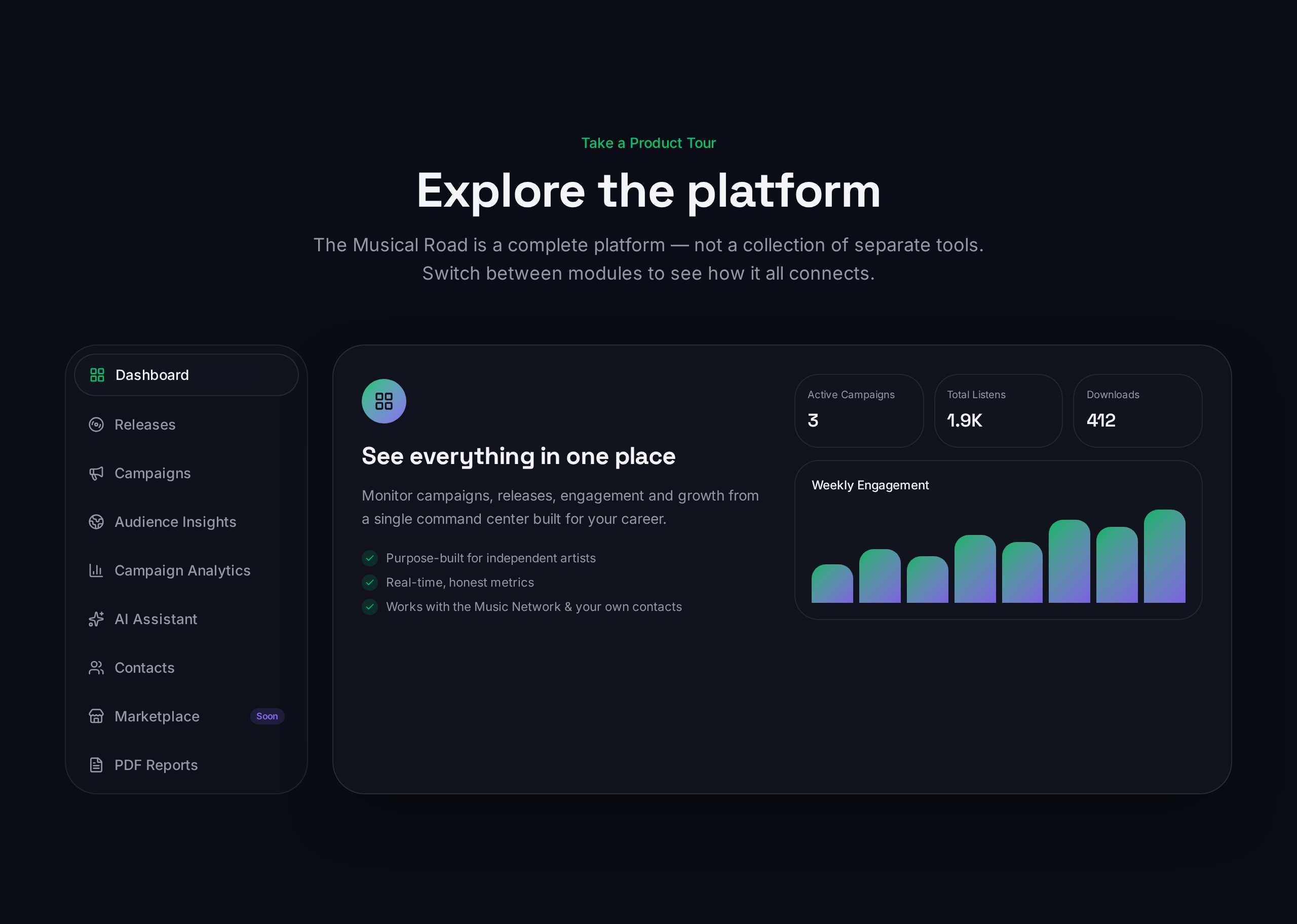
Centralized Release Hub
Manage all your metadata and distribution assets in one place before sending them to stores.
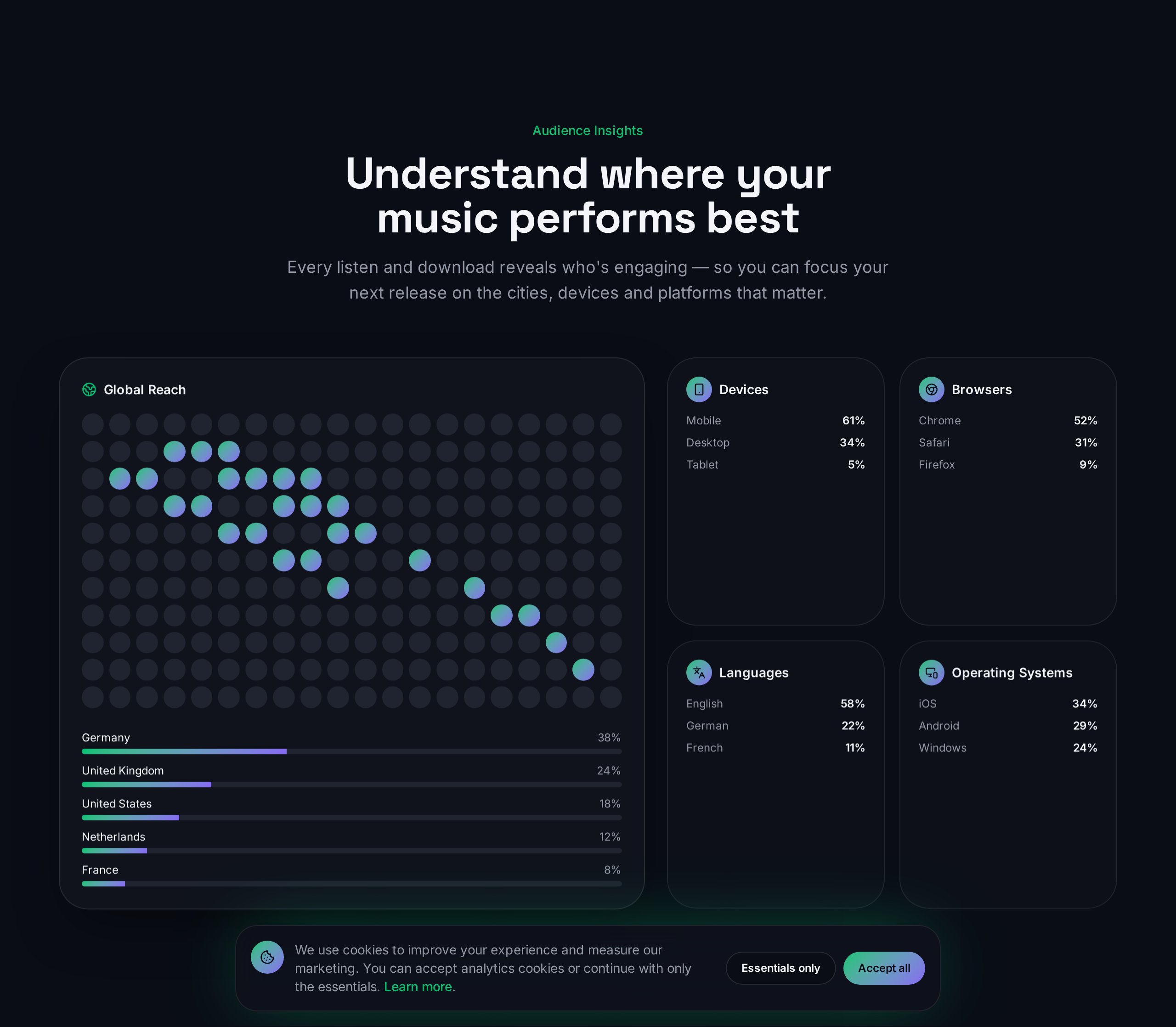
Verify Your Revenue Sources
See exactly which countries are driving your streams to ensure your distribution strategy is working.
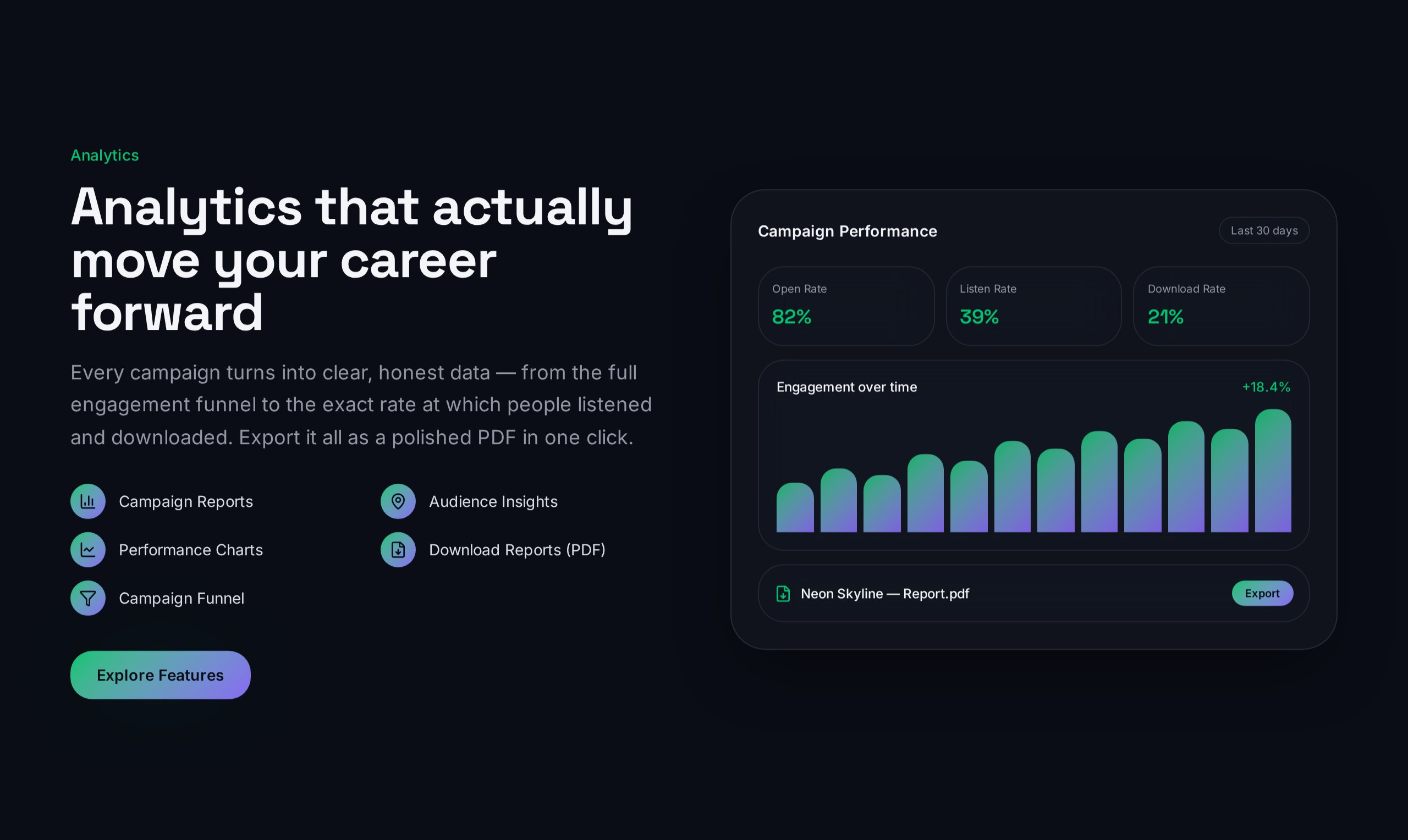
Track Every Penny
Export PDF reports that show engagement and download rates to validate your promo spend.
Frequently asked questions
- Is 100% royalty distribution truly better?
Usually, yes, if you generate more than $50-$100 in royalties per year. If you earn less than the annual fee, a commission-based model is technically cheaper.
- Do flat-fee distributors offer the same features?
Often they offer more. The Musical Road, for example, includes AI-driven promotion and SEO tools that commission-only distributors rarely provide.
Explore more
Related articles
Related pages
- Independent Music Distribution Strategy & Management
- Music Royalty Calculator
- AI SEO for Musicians
- Global Music Network
- How to Manage Music Publishing Administration and Mechanical Royalties
- Strategic Content Fingerprinting and YouTube Content ID Management
- Navigating Sync Licensing Distribution for Independent Musicians
Ready to take control of your distribution?
Join thousands of artists using The Musical Road to manage, promote, and grow their music career.
Start free