On this page
There's one moment that shapes a release more than any other: the first 24 hours. Spotify and other platforms watch how listeners respond on release day to decide how far to push your track. A strong opening earns algorithmic reach; a quiet one gets buried. The single most reliable way to guarantee a strong opening is a pre-save campaign — and most independent artists either skip it or run it badly.
This guide explains what pre-saves are, why they matter more than they seem, and exactly how to run a campaign that converts. It's the pre-release engine behind the 6-week release strategy and a key part of promoting on Spotify.
What is a pre-save?
A pre-save lets a listener commit to your unreleased track before it's out. When they pre-save, the song is automatically added to their library (and often their playlists) the moment it goes live — no action needed on release day.
For fans, it's a one-tap way to say "I want this." For you, it's a bank of guaranteed day-one saves and streams, delivered exactly when they matter most.
Why pre-saves matter more than they look
On the surface, a pre-save is just a save that happens early. In practice, it does three powerful things:
- It front-loads day-one signals. All those saves and streams hit on release day, telling the algorithm "listeners want this" at the exact moment it's deciding your reach.
- It boosts your Release Radar impact. Pre-savers and followers get your track in Release Radar; combined with pre-save saves, that early momentum can trigger wider algorithmic recommendations.
- It converts intent into action. A fan who says "I'll check it out on Friday" usually forgets. A fan who pre-saves is captured while the intent is hot.
In short, pre-saves turn scattered good intentions into a concentrated release-day burst — the single strongest thing you can engineer in advance. This is why skipping them is one of the classic errors in Music Promotion Mistakes Independent Artists Make.
How pre-save campaigns work
The mechanics are straightforward:
- You set up a pre-save through a pre-save/smart-link service (many distributors offer this, plus dedicated tools).
- You get a shareable link (and often a landing page) for the unreleased track.
- Fans click, authorise, and pre-save — sometimes also choosing to follow you.
- On release day, the track auto-adds to their library, and they may get a notification.
The best campaigns don't stop at "here's the link." They give fans a reason to pre-save now and make the ask everywhere their attention already is.
Step-by-step: run a pre-save campaign that converts
Step 1: Launch it early — but not too early
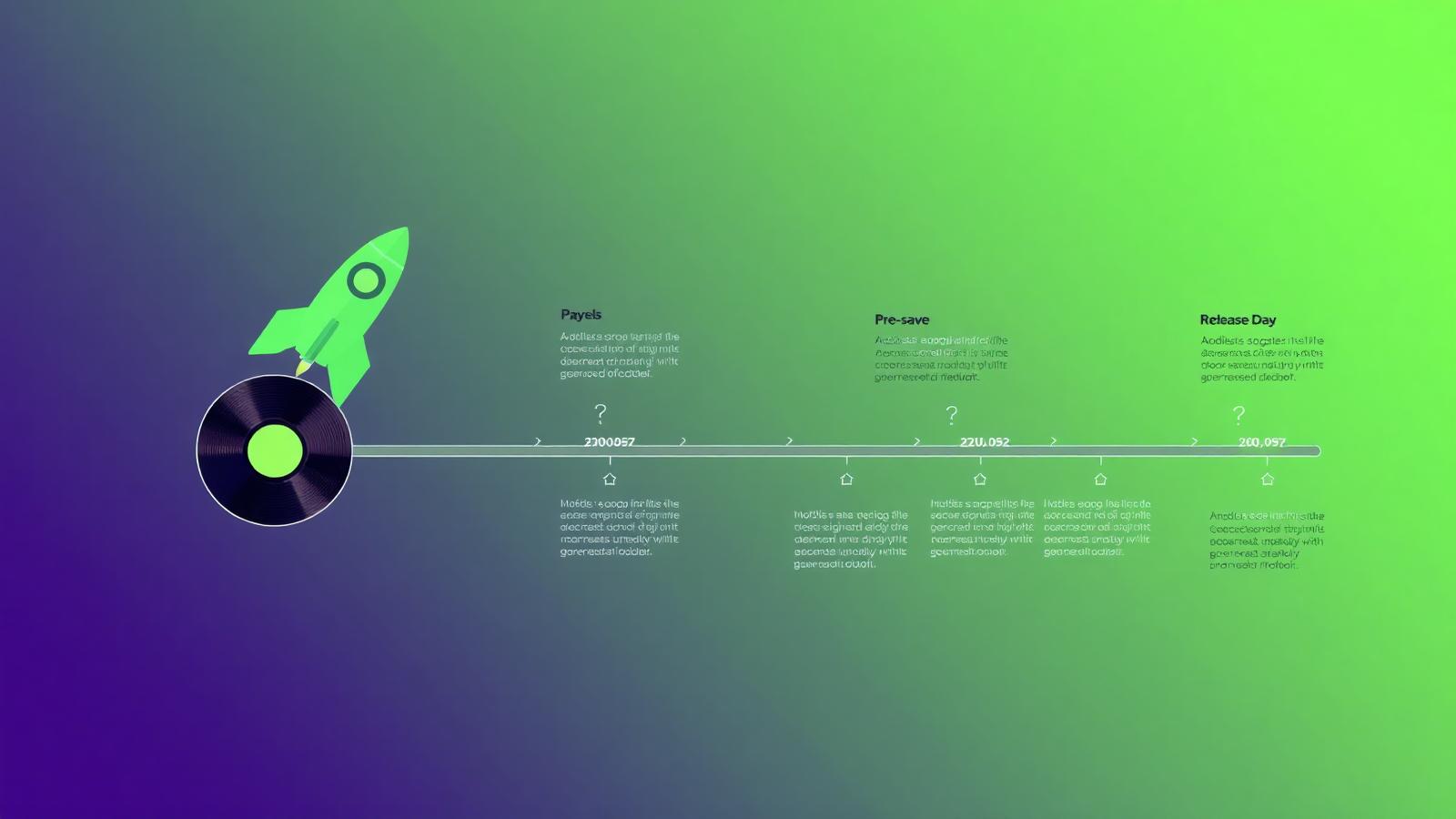
Around 3–4 weeks before release is the sweet spot. Long enough to accumulate meaningful numbers, short enough that fans don't lose interest before release day. This lines up with the pre-release window in the release strategy.
Step 2: Build a clean landing page
Your pre-save link should lead somewhere that looks like you:
- Clear artwork and track title.
- One obvious pre-save button.
- A short, compelling line about the track.
- Consistent branding (see Artist Branding for Musicians).
Every extra step or confusing element loses pre-saves. Keep it frictionless.
Step 3: Give fans a reason to act now
"Pre-save my new song" is weak. Add motivation:
- Exclusivity: "Pre-save to hear it first."
- Incentive: a bonus track, wallpaper, or entry into something for pre-savers.
- Story: why this song matters, what it's about — people save songs they feel connected to.
Step 4: Promote it everywhere
A pre-save link nobody sees collects nothing. Push it through every channel:
- Email your list — your highest-converting audience by far. If you don't have one yet, start now with Email Marketing for Musicians.
- Pin it to your social profiles and put it in your bio link.
- Tease the track with clips that end on the pre-save call to action.
- Mention it in outreach to DJs and curators where appropriate.
Step 5: Remind, then remind again
Most pre-saves come after a reminder, not the first announcement. Space out gentle nudges across the campaign — a launch post, a mid-campaign teaser, a "last chance before it drops" email the day before release. Don't be shy; fans forget.
What to do on release day
Your pre-save work pays off automatically — the saves land — but keep pushing:
- Email your list the moment the track is live.
- Thank your pre-savers publicly; they showed up early and deserve it.
- Ask everyone else for saves and adds, not just listens.
- Engage every comment and share in the crucial first 48 hours.
Combined with your pre-save bank, this concentrated activity is what tells the algorithm to widen your reach. For the full release-day playbook, see How to Promote Your Music on Spotify.
Pre-save mistakes to avoid
| Mistake | Fix |
|---|---|
| Launching only a few days before release | Start 3–4 weeks out |
| Setting up the link and never promoting it | Push it through every channel, repeatedly |
| No reason to pre-save now | Add exclusivity, incentive or story |
| A cluttered, off-brand landing page | One clear button, consistent branding |
| Buying pre-saves or streams | Never — it poisons your signals and reach |
That last one bears repeating: artificial pre-saves and streams trigger fraud detection and can get your track suppressed. Real pre-saves from real fans are the entire point.
Measuring your campaign
Track how many pre-saves you collect and which channels drove them. Over a few releases you'll learn where your fans actually convert — email, a specific platform, a particular type of teaser — and you can concentrate future campaigns there. Tracking your promotion alongside results is where a dedicated tool like The Musical Road helps you turn each release into a smarter one; the pricing shows what's included.
Pre-save vs pre-add vs follow: what's the difference?
These terms get used loosely, so it's worth being precise about what you're asking fans to do:
| Action | What it does | Best for |
|---|---|---|
| Pre-save | Auto-adds the track to a fan's library on release | Day-one saves and momentum |
| Pre-add (Apple) | The Apple Music equivalent of a pre-save | Reaching Apple listeners |
| Follow | Fan gets your release in Release Radar | Long-term reach on every release |
The strongest campaigns ask for both a pre-save and a follow, since following compounds across every future release, not just this one. A good pre-save landing page makes both actions available in a couple of taps.
Promoting your pre-save without annoying anyone
Artists worry that repeatedly asking for pre-saves will irritate fans. The fix isn't to ask less — it's to make each ask feel fresh and worthwhile:
- Vary the angle. One post is about the story behind the song, another is a snippet, another is "last chance before it drops." Same ask, different hook.
- Lead with value. Remind fans what they get — hearing it first, the exclusive, the bonus — not just the mechanical request.
- Use every channel once or twice rather than hammering one channel constantly. Email, socials, bio link and teasers spread the ask naturally.
Fans who opted in want your music. Reminding them a few times over three to four weeks isn't annoying — it's how you make sure the people who want the track actually get it on day one.
Measuring and learning from each campaign
Track two things: total pre-saves collected, and which channel drove them. After a few releases you'll see a clear pattern — maybe email converts best, or a particular teaser style outperforms. Double down on what works and stop wasting effort on what doesn't. Pair pre-save numbers with your release-day save rate in Spotify for Artists to see how well pre-release intent converted into real momentum. That feedback loop is what turns each pre-save campaign into a sharper version of the last, so your release days keep getting stronger.
Pre-save tools and how to choose one
Several routes exist for setting up a pre-save, and the right one depends on how much control you want:
- Your distributor's built-in pre-save — the simplest option; often included, though sometimes limited in customisation and data.
- Dedicated smart-link / pre-save services — more control over the landing page, branding and (crucially) the fan data you collect.
- All-in-one artist platforms — combine pre-save with the rest of your campaign so you're not stitching tools together.
Whatever you choose, prioritise two things: a clean, on-brand landing page, and the ability to capture fan contact details where the fan consents. A pre-save that also grows your email list turns a one-off release boost into a long-term audience asset — exactly the compounding effect described in Email Marketing for Musicians.
Combining pre-saves with your other channels
A pre-save campaign performs best when it's woven into everything else you're doing in the pre-release window, not run in isolation:
- Editorial submission: your pre-save momentum strengthens the day-one signals that support algorithmic pickup after your editorial pitch.
- DJ and curator outreach: where appropriate, your private preview link and pre-save link work together — interest from tastemakers plus banked fan pre-saves compound on release day.
- Content teasers: every snippet you post should end on the pre-save call to action, so your content does double duty.
Run as one coordinated push inside the 6-week release strategy, a pre-save campaign stops being a standalone task and becomes the engine that concentrates all your pre-release energy into a single powerful release-day moment.
The bottom line
A pre-save campaign is the closest thing you have to guaranteeing a strong release day — and a strong release day is what unlocks everything downstream. Launch 3–4 weeks out, build a clean landing page, give fans a reason to act now, promote it relentlessly, and remind more than once.
Do this every release and you stop hoping for momentum and start manufacturing it. Slot pre-saves into your 6-week release strategy, pair them with the Spotify promotion checklist, and when you're ready to run your releases in one place, start free on The Musical Road.
Frequently asked questions
What is a Spotify pre-save?
A pre-save lets a listener commit to an unreleased track before it's out. When they pre-save, the song is automatically added to their library — and often their playlists — the moment it goes live, giving you a bank of guaranteed day-one saves and streams.
Why are pre-saves important?
They front-load your day-one signals — all those saves and streams hit exactly when the algorithm is deciding your reach — boost your Release Radar impact, and convert fans' intent into action while it's hot. It's the single strongest thing you can engineer before release.
When should I launch a pre-save campaign?
About three to four weeks before release. That's long enough to accumulate meaningful numbers but short enough that fans don't lose interest before release day. Launching only a few days ahead is a common and costly mistake.
How do I get more pre-saves?
Give fans a real reason to act now — exclusivity, an incentive, or a story — build a clean, on-brand landing page with one clear button, promote the link through every channel especially your email list, and remind more than once, since most pre-saves come after a reminder.
Founder of The Musical Road
Kamil Bobin is the founder of The Musical Road, a platform helping independent artists promote their music professionally to DJs, radio stations, curators and industry professionals. He writes about music promotion, email marketing, release strategies and practical growth tactics for independent musicians.